Stroke treatment in India
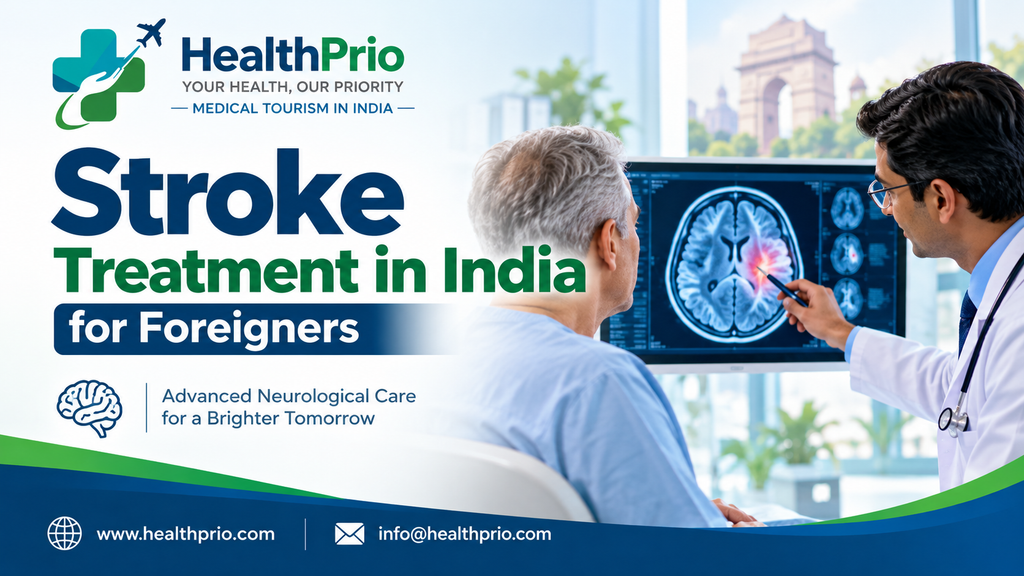
India has some of the best stroke specialists. Different stroke types require different treatments. Treatment can range from emergency diagnosis and/or treatment to interventional and/or surgical procedures and then to rehabilitation. Stroke treatment in India is popular among international patients because of the availability of skilled specialists and world-class hospitals.
Acute stroke treatment in India can include brain imaging, intravenous thrombolysis for eligible ischemic strokes, mechanical thrombectomy for large vessel occlusion strokes, and control of blood pressure. Treatment of complications and neurosurgical and endovascular intervention may also be needed for certain strokes.
India has some of the best neurologists, neurointerventional specialists, and neurosurgeons, along with some of the best and most modern imaging and treatment facilities. Stroke treatment in India can include emergency diagnosis and treatment by the stroke team.
Several centres provide follow-up and stroke prevention, manage complications, and provide rehabilitation, if needed. Depending on the patient’s condition, many patients consider stroke treatment in India. Patients often do an international comparison of healthcare options and find stroke treatment in India to be affordable.
Experienced stroke teams may provide:
- Emergency neurological assessment
- Rapid interpretation of CT and MRI brain imaging
- Evaluation for thrombolysis
- Assessment for mechanical thrombectomy
- Management of blood pressure and other medical complications
- Evaluation of hemorrhagic stroke
- Coordination with neurosurgeons where surgery is required
- Endovascular management for selected vascular conditions
- Rehabilitation planning
Best Stroke Specialist in India
Selecting the best stroke specialist in India can be critical for a patient who requires urgent neurological assessment and advanced stroke management. There are many stroke specialists in India who deal with both ischemic and hemorrhagic strokes. They collaborate with emergency physicians, radiologists, and neurointerventional and neurosurgical teams to assess the stroke type and determine the most suitable treatment. For you.
A stroke neurologist in India can help diagnose and manage cerebrovascular conditions. They are involved in emergency settings and provide longer-term prevention as well. Stroke neurologists in India collaborate with other specialists on long-term management and rehabilitation planning. Stroke management involves integration of several specialities in order to achieve best outcomes. In an emergency setting, a stroke specialist in India can be a part of a multidisciplinary stroke team and play a coordinating role.
Types of Stroke Treatment in India for Foreigners
Intravenous thrombolysis
Intravenous thrombolysis is a treatment for ischemic strokes in which a clot buster is administered to dissolve the stroke-causing clot. The goal is to improve blood flow to the brain. Not all patients are eligible for this therapy because they may be at high risk for bleeding, and it may be too late for treatment. The treatment window may be within 4.5 hours of symptom onset.
Mechanical thrombectomy
Mechanical thrombectomy is an advanced endovascular procedure in which a catheter is inserted into a patient’s blood vessels to reach the blockage and then used in conjunction with special equipment to remove the clot. This is performed in patients with large-vessel occlusion stroke.
Blood pressure and risk factor management
Along with management of other vascular risk factors, blood pressure management is important in stroke management to reduce the risk of stroke recurrence. For diabetes, hypertension, or hyperlipidemia, modifiable risk factors, a combination of medication and lifestyle changes may be required to manage them.
Neurosurgical treatment
For some types of hemorrhagic strokes, surgery may be considered to help remove blood, relieve pressure, or address the cause of the bleeding. Doctors also consider factors such as brain imaging and the patient’s condition when deciding whether surgery is appropriate.
Endovascular treatment
Endovascular treatments are less invasive options for certain brain conditions and may be considered for brain aneurysms or vascular malformations.
Best stroke treatment hospital in India
The best stroke treatment hospital in India has specialized neurology and emergency care services. An integrated stroke hospital combines emergency, stroke, and critical care units, brain imaging, neurointerventional and neurosurgical suites, and rehabilitation services. An integrated stroke care model may be useful because timely decisions are critical for stroke care.
The top stroke hospital in India has a multidisciplinary stroke team comprising neurologists and neuroradiologists who evaluate patients for a variety of cerebrovascular emergencies. An integrated model may help because timely decisions are crucial in stroke care. Indian hospitals are also popular for oncology treatment, eye treatment, dental treatment. orthopaedic treatment, etc.
A specialized stroke care hospital in India may provide access to:
- Experienced stroke neurologists
- Dedicated stroke units
- 24/7 emergency and neurological care
- Rapid brain imaging
- CT and MRI services
- Vascular imaging when required
- Neurointerventional services
- Neurosurgical support
- Intensive medical monitoring
- Stroke rehabilitation
- Long-term follow-up and secondary prevention
Stroke treatment cost in India for foreigners
Stroke treatment cost in India for foreign patients vary due to the nature of stroke as an emergency condition. Managing a stroke case requires multiple immediate investigations and a treatment decision upon the patient’s arrival in the emergency department. Various components contribute to the final cost of stroke treatment in India for foreign patients, including emergency consultation, imaging and other tests, hospital stay, medicines, intensive care, and interventions if required. For instance, thrombectomy or stroke surgery costs will be significantly higher than medical management alone.
Stroke treatment costs in India for foreign patients therefore vary from patient to patient, depending on the need for further tests and/or treatments, including medical and surgical interventions. An uncomplicated stroke case may cost less than a complicated case that requires surgery or thrombectomy.
The overall stroke treatment cost in India may be influenced by:
- Type of stroke
- Severity and location of the stroke
- Time between symptom onset and hospital arrival
- Emergency investigations
- CT, MRI and vascular imaging
- Type of acute treatment required
- Need for intensive care
- Length of hospital stay
- Need for surgery or endovascular treatment
- Rehabilitation requirements
- Treatment of underlying medical conditions
Stroke surgery costs in India vary based on the type and extent of surgery required, as well as hospital and ICU stay. In addition to the treatment cost, patients should also enquire about the cost of rehabilitation and follow-up services.
Health Prio: Connect for stroke treatment in India
Health Prio can help patients, including international patients, connect with the concerned hospitals and specialists in India. As stroke is a medical emergency, if you or anyone you know has suffered a stroke, then you should seek emergency medical help rather than taking time to search for a healthcare facilitator for consultation.
Health Prio can also help international patients connect with neurology, neurointerventional, and other relevant specialties. The treating medical team always determines treatment after completing the relevant examinations. We work with a dedicated team to help you access the best neurosurgery treatments in India, including brain tumor surgery in India.
Health Prio can assist with:
Identifying suitable stroke specialists and hospitals
Connecting patients with neurology and neurointerventional teams
Coordinating specialist consultations
Sharing existing medical records and imaging reports
Helping patients understand potential treatment options
Obtaining estimated treatment costs when appropriate
Coordinating appointments and hospital admission
Supporting international patients with treatment logistics
Coordinating rehabilitation and follow-up care
Benefits and Goals of Stroke Treatment
The benefits and goals of stroke treatment are to alleviate symptoms and complications of a stroke, prevent worsening of brain injury, and improve the patient’s long-term neurological condition. It is important for the family members to understand that the treatment is aimed at improving the patient’s condition and facilitating the patient’s long-term recovery of the patient.
Major goals include:
- Restore or improve blood flow in eligible ischemic stroke patients
- Limit brain injury where possible
- Control bleeding and pressure-related complications in hemorrhagic stroke
- Reduce the risk of further neurological damage
- Manage complications
- Support recovery of movement and function
- Reduce the risk of recurrent stroke
- Improve overall quality of life
The recovery period varies based on your medical condition and the treatment you receive. It can easily extend from days to months.
Who Can Benefit from Stroke Treatment?
Stroke treatment is appropriate for patients experiencing an acute cerebrovascular event as well as people who require ongoing rehabilitation and secondary prevention.
Patients who can benefit from stroke treatment are those suffering from:
- Acute ischemic stroke
- Hemorrhagic stroke
- TIA or suspected cerebrovascular events
- Large-vessel occlusion
- Stroke caused by certain vascular conditions
- Stroke requiring neurosurgical management
- Stroke requiring intensive medical monitoring
- Stroke survivors requiring rehabilitation
Related: Reverse Medical Tourism in India: Global Patients, Indian Expertise