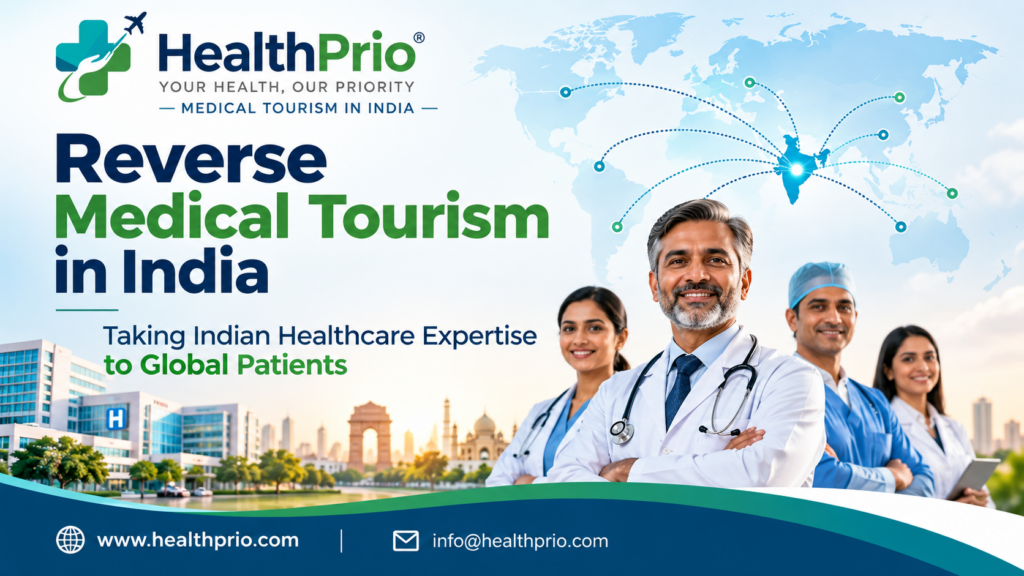
Until a few years ago, India’s medical tourism story followed a familiar model: international patients travel to India to access world-class hospitals, experienced doctors, and specialized treatment.
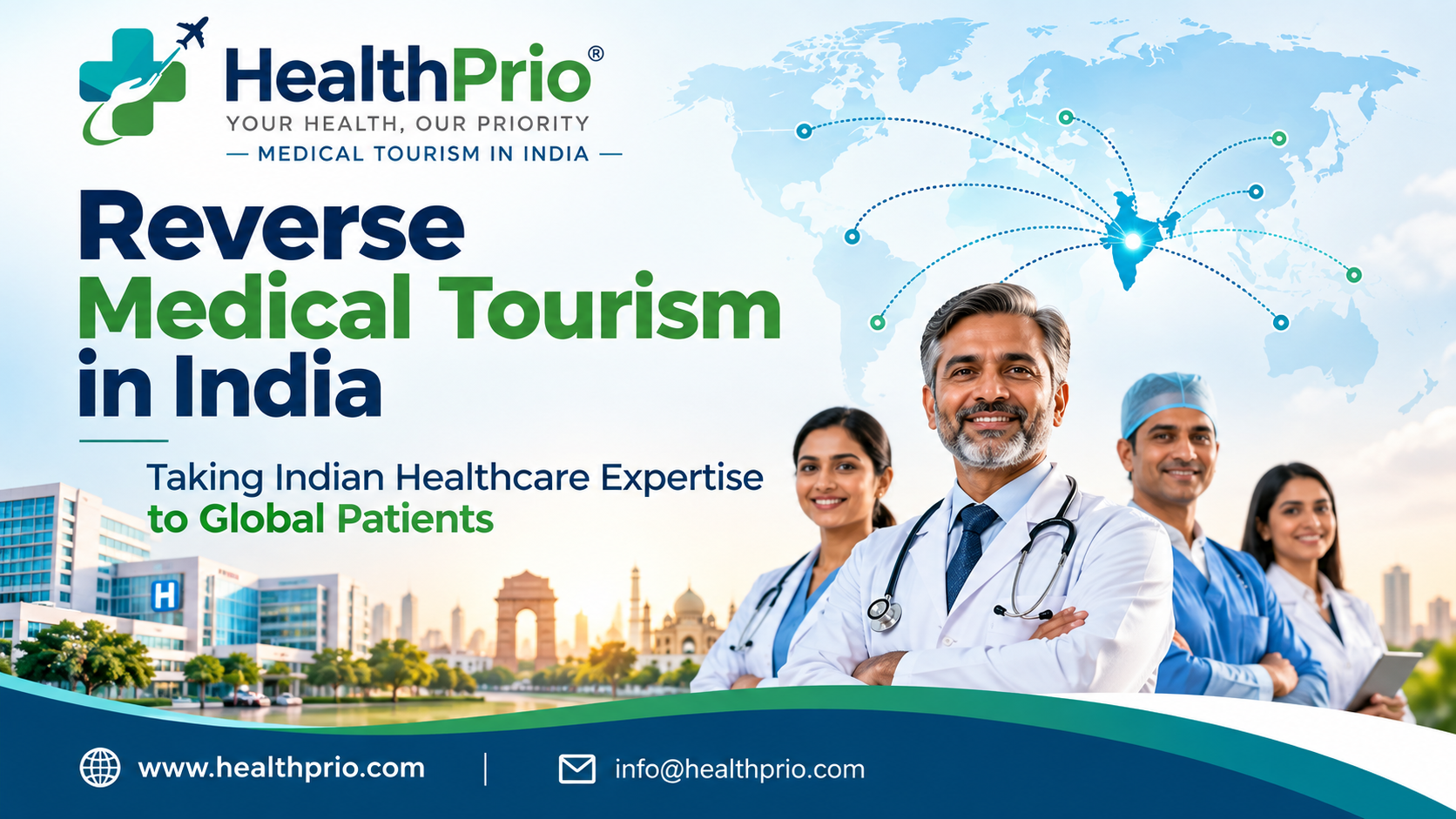
But healthcare is now moving in another direction: reverse medical tourism.
Reverse Medical Tourism in India
Reverse medical tourism in India can be divided into two distinct emerging phenomena:
Number 01 reverse medical tourism outbound model: In this medical tourism model, a team of highly experienced Indian specialists travels internationally to perform advanced procedures at partner hospitals overseas.
Number 02 reverse medical tourism inbound model: In this medical tourism model, Non-Resident Indians (NRIs) and the Indian diaspora travel back home specifically to access healthcare.
Both models of full reverse medical tourism in India help the overall growth of the Indian healthcare ecosystem.
Both inbound and outbound medical tourism models offer substantial benefits to patients, healthcare systems, and the Indian economy.
- Benefits of the Outbound Model (Indian Specialists Travelling Abroad)
In this model, complex surgical teams travel to the patient’s home country to perform the surgery with the help of partner hospitals there.
- Eliminates Patient Travel Risks: Patients who are medically unfit for long international flights can receive elite care safely at home. Such patients include advanced oncology, cardiac, or transplant patients.
- Drastic Cost Reductions: It eliminates expensive international flights, long-term hotel stays, local transport, and daily living costs for both the patient and their family members.
- Local Recovery and Support: Patients undergo complex elective surgeries inside their own local partner hospitals, allowing them to heal surrounded by their immediate support system.
- Cross-Border Knowledge Sharing: Travelling Indian surgeons collaborate with overseas medical institutions, elevating local clinical protocols and building long-term international healthcare partnerships.
2. Benefits of the Inbound Model (The Diaspora Returning for Care)
In this model, a massive wave of NRIs living in the US, UK, and GCC countries are skipping local systems to seek treatment in India.
- Massive Financial Savings: Healthcare costs in India run roughly 1/8th to 1/10th of Western costs. Therefore, NRI medical tourism in India has become popular all over the world.
- Affordable High-Tier Insurance: Annual health insurance premiums for NRIs buying coverage in India are also much cheaper than in the Western world.
- Zero Waiting Periods: Unlike Western public health systems or insurance-approval delays in Western countries, patients can access specialized diagnostics and planned surgeries almost immediately.
- Familiar Support Systems: Recovering in India allows diaspora or NRI patients to stay with extended family, eliminating the isolation of overseas hospitalizations.
3. Structural Benefits to India’s Healthcare Ecosystem
- Reverse Brain Drain: The booming medical and wellness tourism market has incentivized world-class Indian emigrant doctors to return home to practice, bringing advanced Western training back into the Indian healthcare and medical sector.
- Economic Boost & Infrastructure Growth: The medical tourism market is projected to grow steadily. This influx of foreign revenue drives major technological advances, funding state-of-the-art hospitals and digital infrastructure supported by initiatives like Heal in India.
Build India–Africa healthcare corridors.
Medical tourism facilitators could develop partnerships with hospitals, clinics, and healthcare organizations in selected African countries.
Africa, the Middle East, and Central Asia Could Be Important Markets
Countries where patients face limited access to certain super-specialities could potentially benefit from structured partnerships with Indian hospitals and specialists.
The opportunity is not simply to send doctors abroad.
It is to build healthcare corridors connecting:
Indian Hospitals + Indian Specialists + Overseas Hospitals + Telemedicine + Diagnostics + Training + Patient Support
Such partnerships could include specialist consultations, medical camps, surgical missions, doctor training, second opinions, clinical protocols and referrals for patients who require treatment in India.
HealthPrio – Connect for Reverse Medical Tourism in India
With the integrated healthcare ecosystems in India, medical tourism companies in India are ready to offer comprehensive 360-degree support to cross-border healthcare networks. HealthPrio can position itself as the bridge between Indian healthcare expertise and patients outside India, rather than limiting its role to bringing patients physically to Indian hospitals.
HealthPrio can create a structured platform where patients from Africa, the Middle East, CIS countries, and other markets can access Indian specialists remotely.
Reverse medical tourism should not mean that every patient stays in their home country. Treating doctors will decide whether a patient qualifies for treatment in their home country or should travel to India.
Final Thought
India has doctors.
India has hospitals.
India has technology.
India has pharmaceutical and healthcare capabilities.
The next challenge is connecting that expertise to the world through trusted, ethical, and clinically sound partnerships.
Medical tourism brought the world to India.
Reverse medical tourism could take Indian healthcare expertise global.